
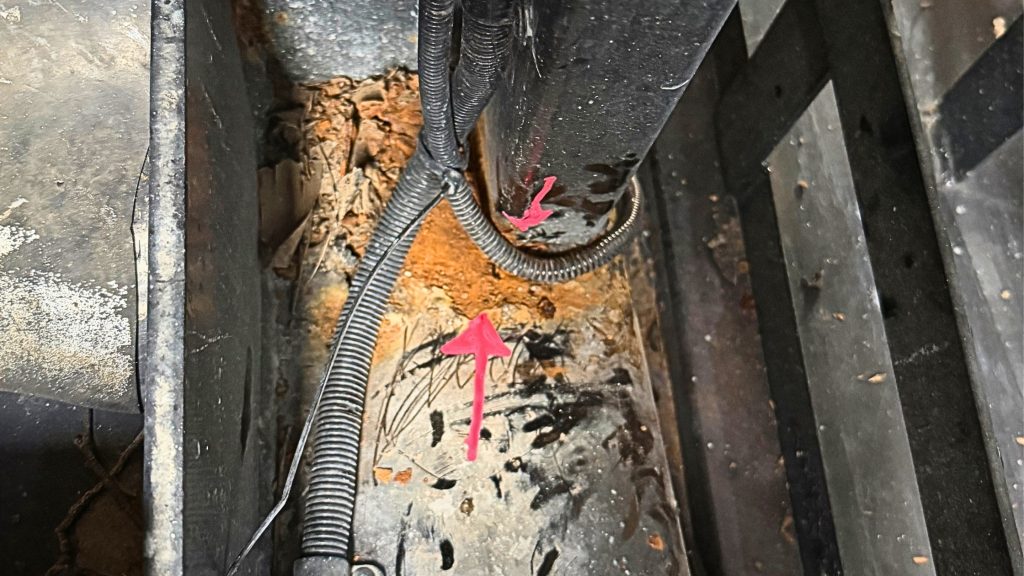
Not every rusty EWP needs major repairs, but not every patch of rust should be dismissed as cosmetic either.
EWPs work outdoors, travel in all weather conditions and can spend years exposed to moisture, dirt, road grime and harsh environments. Some degree of surface corrosion on an older machine isn’t unusual.
The important question isn’t simply:
“Is there rust?”
It’s:
“Where is it, how far has it progressed and what is happening underneath?”
Understanding the difference can help EWP owners recognise when corrosion may need a closer look.
Surface Rust Doesn’t Always Mean Structural Damage
Light surface corrosion can develop where paint or protective coatings have been scratched, chipped or worn away.
Caught early, the affected area may require relatively straightforward treatment and protection.
But appearances don’t always tell the whole story.
Corrosion can continue underneath damaged coatings, around joints or between components where the full extent isn’t immediately visible. Current Australian EWP guidance recognises corrosion as something inspections may need to identify, including internal areas that sometimes require dismantling to properly assess.
That’s why simply painting over a rusty area isn’t necessarily the answer.
Before treating the appearance, it helps to understand the condition underneath.
Location Matters
A small rusty patch on one part of a machine may have very different significance from corrosion in another area.
Particular attention should be given to corrosion affecting or surrounding areas such as:
- structural members and boom sections
- welds and fabricated joints
- mounting points
- pins and pivot areas
- component interfaces and overlapping steelwork
- areas that regularly trap moisture or debris
These areas can require closer assessment because the condition of the underlying material may be more important than what can be seen from the surface.
Major-inspection guidance from the Elevating Work Platform Association of Australia specifically calls for corrosion to be removed from critical components where necessary so those components can be completely examined.
Watch for More Than Orange Rust
Corrosion doesn’t have to look dramatic to deserve attention.
Things worth watching for include bubbling or lifting paint, flaking or scaling metal, swelling around joints, persistent rust staining, pitting in the steel or corrosion that repeatedly returns after being cleaned.
These can indicate that deterioration extends beyond a little surface discolouration.
The more material that has deteriorated, the less useful a simple visual judgement becomes.
Hidden Corrosion Can Be the Bigger Concern
Some of the most important areas of an EWP aren’t completely visible during an everyday walk-around.
Components overlap. Covers hide areas from view. Moisture can become trapped between surfaces. Paint can also hide what’s happening underneath.
Safe Work Australia’s EWP Code of Practice specifically notes that some components can only be properly inspected after dismantling, including internal areas subject to corrosion.
This is also one of the reasons a Major Inspection is very different from a normal service or routine visual inspection.
During a Major Inspection, critical areas may be dismantled, cleaned and prepared so the actual condition of the material can be assessed. EWP Systems’ existing Major Inspection process includes structural assessment for corrosion and other hidden damage.
Environment Makes a Difference
Where and how an EWP spends its life matters.
Machines exposed regularly to moisture, harsh weather or corrosive environments may require more attention than equipment operating in relatively clean and dry conditions.
Australian guidance recommends that older EWPs and those used intensively or in harsh operating environments be inspected more frequently where appropriate.
For EWP owners, that makes regular cleaning and inspection particularly worthwhile.
Keeping surfaces clean also makes changes easier to spot before years of grime, grease and corrosion build up around them.
Don’t Just Cover It Up
Fresh paint can make an older machine look considerably better.
But paint isn’t an assessment.
If corrosion is significant, repeatedly returning or located around a critical area, simply removing the loose rust and coating over it can hide the evidence without answering the important question:
What condition is the material actually in?
Depending on the location and severity, proper assessment may involve cleaning the area back, measuring material loss or using appropriate inspection and testing methods.
The right response depends on what is found.
So When Should EWP Corrosion Be Checked?
You don’t need to panic every time you see a rusty bolt.
But corrosion deserves closer attention when it appears to be progressing, involves pitting or material loss, sits around structural or critical components, is emerging from underneath coatings or between components, or simply can’t be properly assessed visually.
If you’re unsure, having the area inspected is far better than guessing from the colour of the rust.
Because with corrosion, what you can see isn’t always the whole story.
Found Corrosion on Your EWP?
If you’ve noticed corrosion during servicing, maintenance or a routine walk-around, the team at EWP Systems can assess the affected area and help determine whether further inspection or repair is required.
We provide EWP inspections, servicing, repairs and Major Inspections from our Sunshine Coast workshop.
Click here to check out ways you can reach out to us, we are always here to help.
