
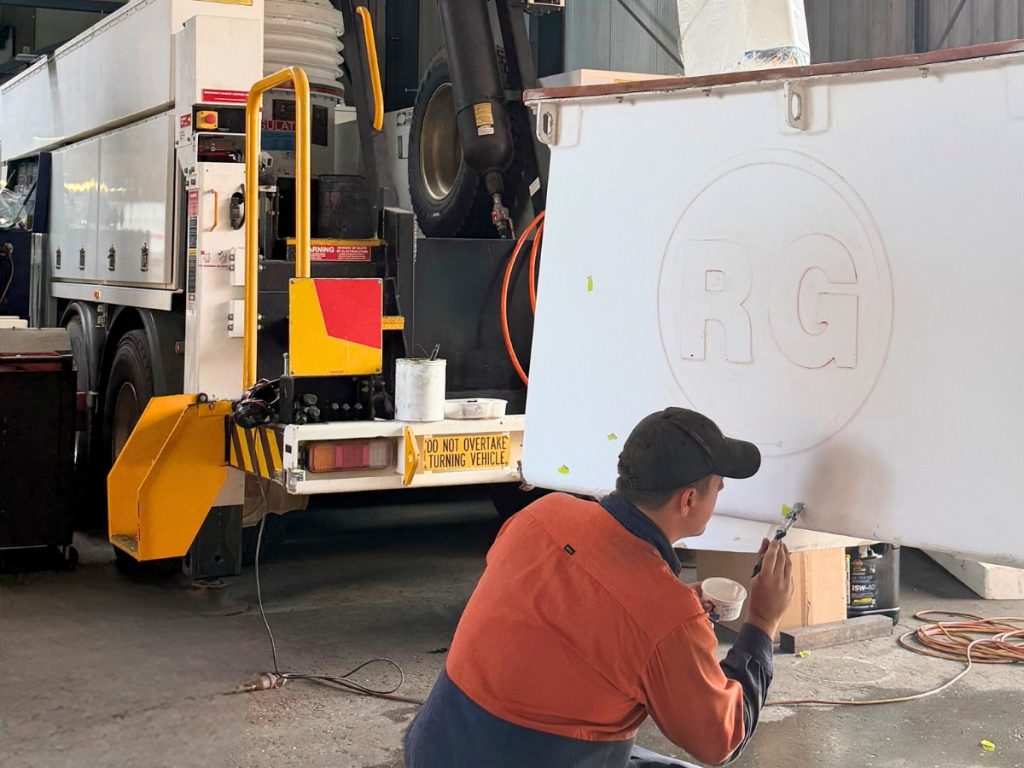
An older EWP doesn’t automatically mean a machine that’s reached the end of its useful life.
For many owners, a well-maintained machine still does exactly what they need it to do. But as equipment ages and repair costs begin to increase, there eventually comes a point where a bigger question needs to be asked:
Is this machine worth refurbishing, or is it time to replace it?
There isn’t one answer that applies to every EWP.
The condition of the machine, its history, replacement cost, parts availability and the work it performs all need to be considered.
Here’s what we’d look at when deciding whether an EWP refurbishment makes sense.
What Do We Mean by EWP Refurbishment?
Refurbishment is more than making an older machine look new again.
Depending on the condition of the EWP and the scope of work required, refurbishment may involve addressing worn mechanical components, hydraulic systems, cylinders, pins and bushes, hoses, electrical components, structural repairs, corrosion, paintwork and other areas of the machine.
The goal isn’t simply appearance.
It’s about addressing deterioration and wear so the machine can continue to provide reliable service.
And importantly, not every machine requires the same level of refurbishment.
1. Start With the Overall Condition of the Machine
Age alone doesn’t tell you whether an EWP is worth keeping.
Two machines of exactly the same age can be in dramatically different condition depending on their workload, operating environment and maintenance history.
A machine that has been regularly serviced and repaired as issues arise may be an excellent candidate for further investment.
Another of the same age may have extensive wear, corrosion or a history of neglected maintenance that makes the decision much less straightforward.
That’s why the condition of the individual machine matters more than simply the year it was manufactured.
2. Does the Machine Still Suit Your Needs?
This is an easy one to overlook.
Before investing significantly in an older EWP, ask whether you’d still choose that machine for the work you do today.
Does it have the right working height?
Does it have the reach and capacity you need?
Is it suitable for your current type of work?
If the machine continues to do everything your business requires, refurbishment may make considerably more sense than replacing it simply because it’s getting older.
On the other hand, if you’ve outgrown its capabilities, investing heavily in it may not be the best long-term decision.
3. Compare the Cost With Replacement
This is where the numbers become important.
A refurbishment can represent a significant investment, but so can replacing a specialised EWP.
The question shouldn’t simply be:
“How much will this refurbishment cost?”
It should also be:
“What would it cost to replace this machine with something that performs the same job?”
That comparison can look very different depending on the type, size and specification of the EWP.
4. Consider Parts Availability
A machine may be mechanically worth repairing, but parts availability still needs to form part of the decision.
As equipment gets older, certain components can become difficult or expensive to source.
Before committing to substantial refurbishment work, it’s worth considering whether replacement parts and ongoing support are likely to remain available.
A machine that can be maintained for years to come is a very different proposition from one where every future repair involves trying to source obsolete components.
5. Look Beyond the Immediate Repair
Sometimes the current problem is only one part of the picture.
If an older EWP needs a significant repair, it’s worth considering the condition of the rest of the machine at the same time.
Are several other major components approaching the end of their service life?
Is corrosion becoming widespread?
Has the machine required increasingly frequent repairs?
Or is the rest of the machine fundamentally sound?
Looking at the EWP as a whole can help avoid spending heavily on one repair only to face another major expense shortly afterwards.
6. Think About Downtime
Replacement isn’t always immediate.
Depending on the type of EWP required, sourcing and commissioning another machine may take time.
If the existing EWP is well suited to the business and can be successfully refurbished, retaining a known machine may sometimes be a practical option.
But refurbishment also requires workshop time, so expected downtime should form part of the decision either way.
When Might Refurbishment NOT Be Worth It?
We think this question is just as important.
There are circumstances where continuing to invest in an older EWP may no longer make financial sense.
Extensive structural deterioration, significant corrosion, poor parts availability, repeated major failures or a machine that no longer suits the owner’s requirements can all shift the balance towards replacement.
There can also be a point where the combined cost of required work simply isn’t justified by the value and expected future life of the machine.
The aim shouldn’t be to keep every old EWP alive at any cost.
It should be to make the decision that provides the best long-term outcome for the owner.
Refurbishment Isn’t Just About Making an Old Machine Look New
A freshly painted EWP can look fantastic.
But a worthwhile refurbishment goes much deeper than appearance.
It’s about understanding the condition of the machine, addressing deterioration appropriately and determining whether further investment can provide useful, reliable service for years to come.
For the right machine, refurbishment can be an excellent way to maximise the value of an existing asset.
For another, replacement may be the smarter option.
Knowing the difference is the important part.
Considering Refurbishing an Older EWP?
If you’re unsure whether an older machine is worth further investment, EWP Systems can assess its condition and discuss the options available.
Our Marcoola workshop provides EWP repairs, refurbishment, servicing and Major Inspections for customers across the Sunshine Coast and beyond.
Call, email, text – we are here to help, click here for our contact details.
