
When you need EWP repairs, you usually want one thing: to get the machine sorted and back to work as quickly as possible.
A technician doesn’t necessarily need to be standing beside the machine to start understanding what may be happening. A few key pieces of information, along with some clear photos or videos, can provide valuable clues before the repair even begins.
Having these details ready when you call can help your EWP repairer understand the problem, determine the best next step and potentially reduce unnecessary downtime.
Here are seven things that can help.
1. The Make and Model
Start with the basics.
Knowing the manufacturer and model helps your technician understand exactly which type of machine they’re dealing with.
Different machines use different hydraulic, electrical and control systems, so this information can immediately narrow down where to start.
If you’re not sure of the model, don’t worry. A clear photo of the machine and its identification plate can often help.
2. The Serial Number
If you can find it, have the machine’s serial number handy.
Serial numbers can help identify the exact machine configuration, particularly where manufacturers have made changes during a model’s production life.
It can also be important when identifying or ordering replacement parts.
A quick photo of the identification plate is usually the easiest option.
3. A Clear Description of What It’s Doing
You don’t need to diagnose the problem yourself.
In fact, we’d rather you simply tell us exactly what the machine is doing.
For example:
“The boom raises but won’t telescope.”
“The machine starts, but the basket controls aren’t responding.”
“There’s hydraulic oil leaking underneath the machine.”
“It makes a knocking noise when the boom moves.”
Those observations are much more useful than trying to guess which component has failed.
4. Any Fault Codes or Warning Lights
If the machine is displaying a fault code, warning light or error message, take a photo before switching anything off.
That information can provide an important clue when diagnosing electrical or control-system faults.
Even intermittent codes are worth recording.
If it appears and then disappears, grab a photo while you can.
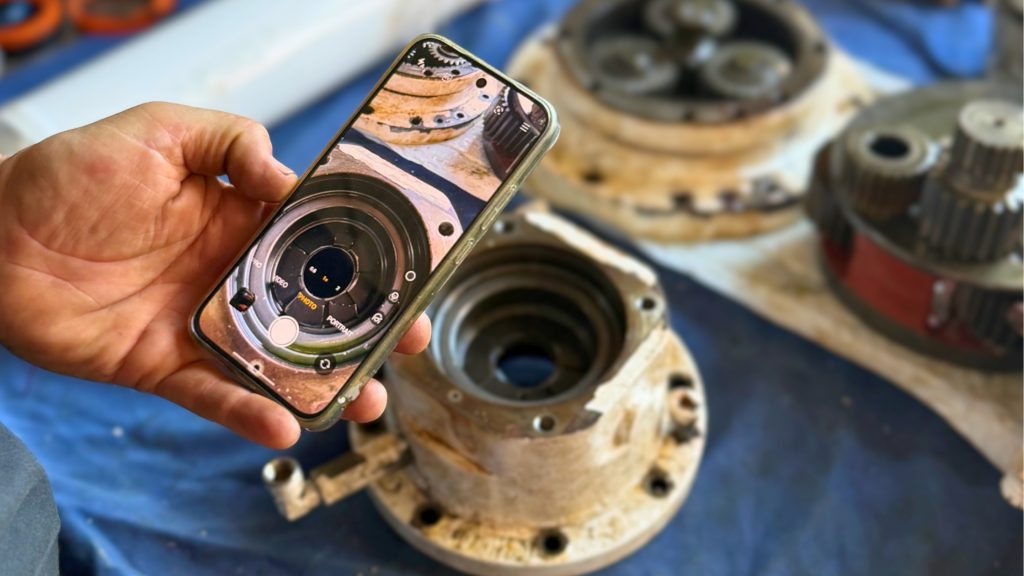
5. Photos – and Videos Can Be Even Better
This is one of the easiest things you can provide.
If you can see the problem, take a photo of it.
For something involving movement, unusual operation or a strange noise, a short video may be even more helpful.
It’s also useful to take one wider photo showing where the problem is located on the machine, followed by a closer image showing the issue itself.
A technician may spot something in a photo that is difficult to describe over the phone.
6. When Did the Problem Start?
Did the machine stop suddenly?
Has the problem gradually become worse?
Does it only happen occasionally?
Did it begin after the machine was transported, serviced or used on a particular job?
The circumstances surrounding a fault can provide useful clues when determining where to investigate first.
7. Has Anything Recently Changed?
Let your technician know if any recent repairs, servicing or other work has been carried out.
Even if it seems unrelated, it’s worth mentioning.
The same applies if a component has recently been replaced, the machine has been sitting unused for an extended period, or the fault appeared immediately after another issue was repaired.
Sometimes the smallest piece of information can point a technician in the right direction.
Need EWP Repairs but Don’t Have All These Details? That’s Okay.
You don’t need to be an EWP technician before calling one.
If all you know is:
“It was working yesterday and now it won’t lift.”
That’s okay too.
A good technician will ask questions to help narrow down what’s happening.
But if you can provide the make, model, serial number, a description of the problem and a few clear photos or videos, it can make that initial conversation much more productive.
Ultimately, the goal is simple:
Understand the problem sooner and get your machine back to work.
Need Help With an EWP Fault?
EWP Systems provides EWP repairs, diagnostics, servicing and breakdown support for elevated work platforms.
If something isn’t operating as it should, give our team a call.
If possible, have your machine details ready and send through a few photos and we’ll help determine the best next step.
Click here to reach out to us today.
