
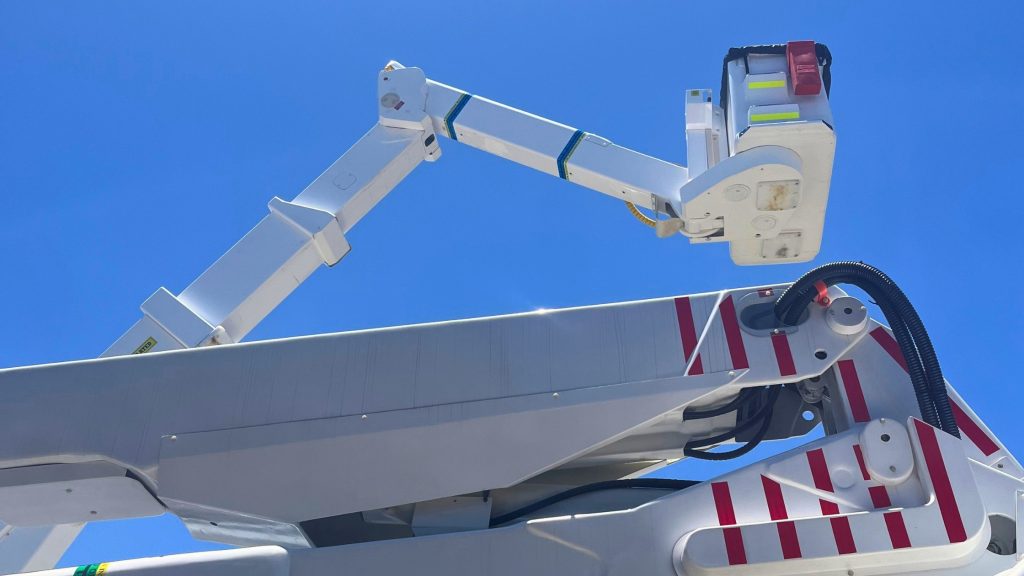
Insulated EWPs play a critical role when working near live electrical infrastructure.
Unlike standard elevated work platforms, insulated machines are specifically designed to provide a level of protection when operating around electrical hazards.
But insulation isn’t something you can see.
And it’s certainly not something you should assume remains effective forever.
That’s why regular electrical testing is so important.
What Is An Insulated EWP?
An insulated EWP is designed with specialised insulating components that help provide protection when working near electrical conductors and infrastructure.
These machines are commonly used by:
- Electrical contractors
- Utility providers
- Power authorities
- Telecommunications companies
Because operator safety is paramount, the insulating properties of the machine must be verified through regular testing.
Why Isn’t A Visual Inspection Enough?
From the outside, an insulated EWP may appear perfectly fine.
However, insulation performance can be affected by factors such as:
- UV exposure
- Moisture
- Contamination
- General wear and tear
- Environmental conditions
Many of these issues cannot be identified through a simple visual inspection alone.
Testing is required to confirm that the insulating components continue to perform as intended.
What Does Electrical Testing Involve?
Electrical testing is designed to verify the integrity of the machine’s insulating components.
Depending on the machine and testing requirements, this may include assessment of:
Insulating Boom Sections
Verifying that insulating components continue to meet required performance standards.
Bucket Insulation
Testing the insulating properties of the work platform.
Leakage Current Testing
Measuring the amount of electrical current that may pass through insulating components.
Visual Inspection
Assessing components for contamination, damage, deterioration or defects.
Supporting Documentation
Reviewing testing records and certification requirements.
Why Is Electrical Testing Important?
Electrical testing helps provide confidence that the machine continues to offer the protection it was designed to provide.
Regular testing helps:
- Verify insulating performance
- Support operator safety
- Maintain compliance requirements
- Identify issues before they become critical
- Provide documented evidence of testing
When working around electricity, assumptions can be costly.
Testing removes uncertainty.
How Often Should Testing Be Carried Out?
Testing intervals can vary depending on:
- Manufacturer requirements
- Machine type
- Applicable standards
- Operating environment
Owners should always refer to manufacturer recommendations and applicable standards to ensure testing is carried out within required timeframes.
Electrical Testing Is About More Than Compliance
Many people view testing as a compliance requirement.
In reality, it is first and foremost a safety measure.
The goal isn’t simply obtaining a certificate.
The goal is ensuring that the machine continues to provide the level of protection operators rely on when working near electrical infrastructure.
Don’t Assume. Verify.
Insulation cannot be accurately assessed by appearance alone.
Regular electrical testing provides confidence that the machine continues to perform as intended and helps ensure operators remain protected.
Need Electrical Testing for an Insulated EWP?
If your insulated EWP is due for testing, EWP Systems can help.
Our team can assist with inspections, testing coordination, compliance requirements and ongoing maintenance support.
Click here to reach out.
